SAST (static application security testing) analyses source code without running it, so it finds vulnerabilities early, down to the exact line. DAST (dynamic application security testing) attacks a running application from the outside, the way an attacker would, so it finds problems that only appear at runtime, such as misconfigured servers and broken authentication. They catch different classes of issue at different stages, which is why most teams run both.
- SAST reads code: early, fast, points to the file and line, but cannot see how the deployed app is configured.
- DAST probes a running app: finds runtime and configuration problems, but cannot tell you which line caused them.
- Static code testing covers more than security: complexity, duplication and maintainability are static checks too.
- Run SAST, dependency scanning and secrets detection on every pull request; run DAST against staging on a schedule or before releases.
- Neither replaces a periodic manual penetration test or human code review.
What is static code analysis (SAST)?
Static code analysis inspects source code, bytecode or binaries without executing them. The tool parses the code into a structure it can reason about, then follows how data moves through it. If input from a request can reach a database query or a shell command without being validated, that path is reported as a likely injection flaw, with the file, the line and the route the data took.
Because it needs only the code, static analysis can run in an editor, on every pull request or in a nightly build, long before anything is deployed. Security-focused static analysis is called SAST; the same techniques also measure engineering quality, such as complexity and duplication. For a closer look at how it compares with human review, see static code analysis vs code review.
What is dynamic code analysis (DAST)?
Dynamic analysis tests the application while it runs. A DAST scanner crawls a deployed environment, usually staging, and sends crafted requests to every page, form and API endpoint it can find: injection payloads, malformed input, tampered sessions. It then watches the responses for signs that something broke or leaked.
DAST knows nothing about your source code, which is both its strength and its limit. It works the same whatever language you use, and it sees the real deployed system, including the web server, headers and authentication. But when it finds a problem it can only show the request that triggered it, not the line of code responsible.
SAST vs DAST, side by side
| SAST (static) | DAST (dynamic) | |
|---|---|---|
| What it examines | Source code, bytecode or binaries | A running application, over HTTP |
| When it runs | From the first commit: editor, pull request, build | Once there is a deployed environment: staging or pre-release |
| Needs the app running | No | Yes |
| Language dependent | Yes, needs support for your languages | No |
| Points to the cause | File, line and data-flow path | The request and response that showed the issue |
| Typical findings | Injection flaws, unsafe functions, hard-coded secrets, risky dependencies | Misconfiguration, missing security headers, authentication and session flaws, exposed endpoints |
| Main weakness | False positives; no view of runtime configuration | Only covers what it can reach; slower; later in the cycle |
What each approach catches, and misses
Static analysis is strong on
- Injection paths traced through the code, including ones no test exercises yet.
- Hard-coded secrets: API keys, passwords and tokens committed to the repository.
- Dangerous functions and weak cryptography used anywhere in the codebase.
- Code that never runs in testing, such as error handlers and rarely used features.
- Quality risks: complexity, duplication and code that is hard to change safely.
Dynamic analysis is strong on
- Server and framework configuration: verbose errors, directory listings, unsafe defaults.
- Missing or weak security headers and cookie settings.
- Authentication and session handling as it actually behaves in the deployed app.
- Problems between components, where each piece looks fine on its own.
Both struggle with business logic: whether a user should be allowed to see another customer's invoice is a question about intent that neither tool can answer by itself. That is where code review and penetration testing come in.
Static code testing vs dynamic testing
The same split exists outside security. Static testing examines code and documents without running anything: code reviews, linters, type checkers and static analysis. Dynamic testing executes the code: unit tests, integration tests, end-to-end tests and DAST. Static checks are cheap and run constantly; dynamic tests prove that the behaviour is right. A healthy pipeline uses both, and lets the static checks fail fast so slower dynamic tests only run on code worth testing.
Where IAST and SCA fit
Two neighbouring terms come up in the same conversations. SCA (software composition analysis) checks your third-party dependencies against known vulnerabilities; it is usually run alongside SAST. IAST (interactive application security testing) places an agent inside the running application during testing, so it can see both the incoming request and the code path it triggered. IAST combines some strengths of both approaches, at the cost of instrumenting your app.
How to combine SAST and DAST in CI/CD
- On every pull request: run static analysis, dependency scanning and secrets detection. Block merges on critical and high findings only, so the gate stays trusted.
- On every merge to main: rerun the full static scan and keep the history, so you can see whether risk is going up or down.
- On staging, nightly or before each release: run a DAST scan with authenticated credentials, so it reaches the pages real users see.
- Triage in one place: send both kinds of findings to the same backlog, de-duplicated, with an owner and a severity.
- Periodically: commission a manual penetration test for the business logic no scanner can judge.
Frequently asked questions
Is SAST or DAST better?
Neither is better; they answer different questions. SAST finds issues in code early and tells you exactly where they are. DAST finds issues in the running system that code analysis cannot see. If you can only start with one, start with SAST in your pull requests, because it is cheap to run and fixes are easiest before code ships.
Can DAST find vulnerabilities in code that isn't deployed?
No. DAST only tests what it can reach in a running environment. Code that is not deployed, or features hidden behind paths the scanner never finds, are invisible to it. Static analysis covers all the code in the repository, whether or not it is reachable yet.
Does Caudilysis do DAST?
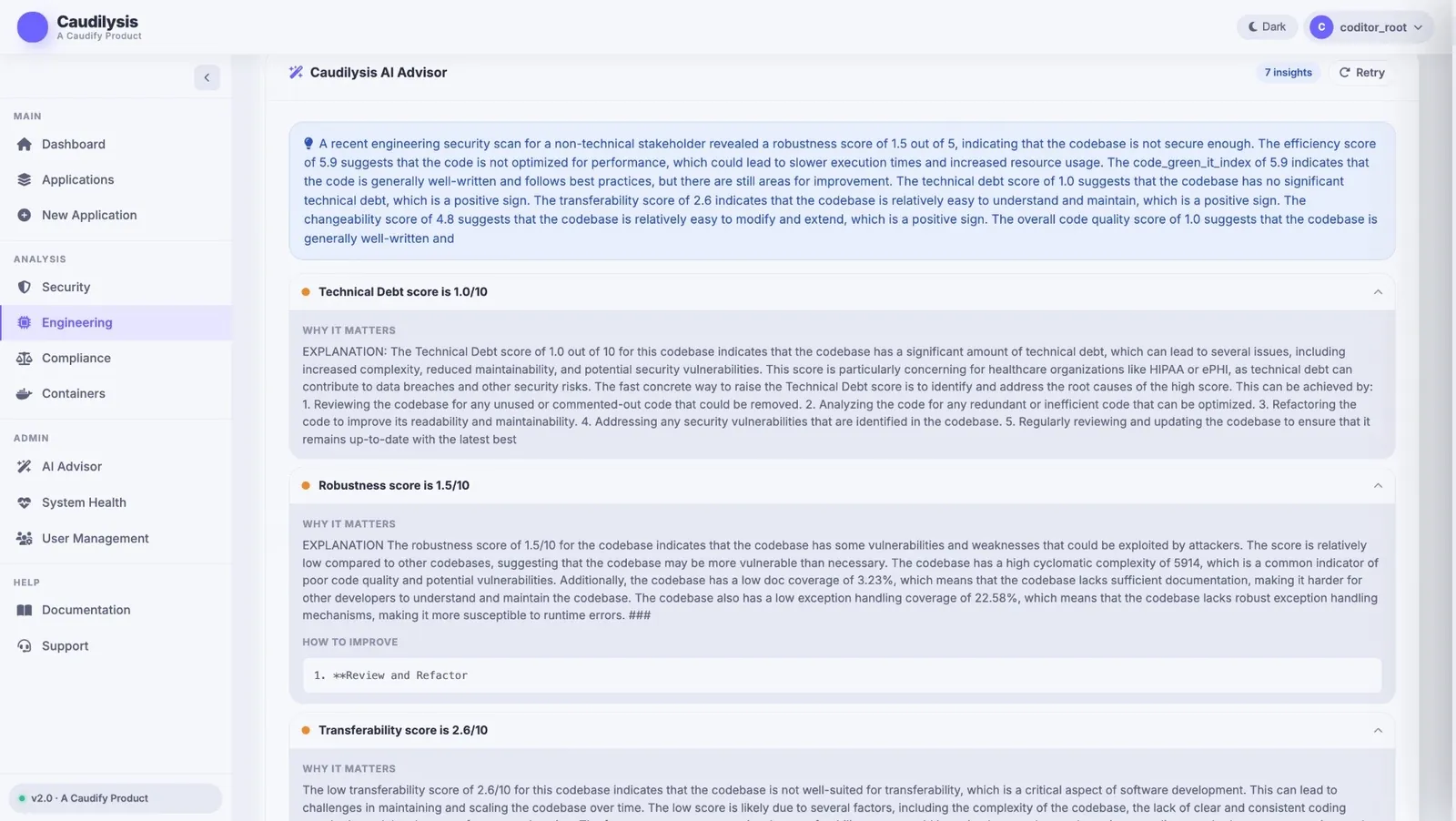
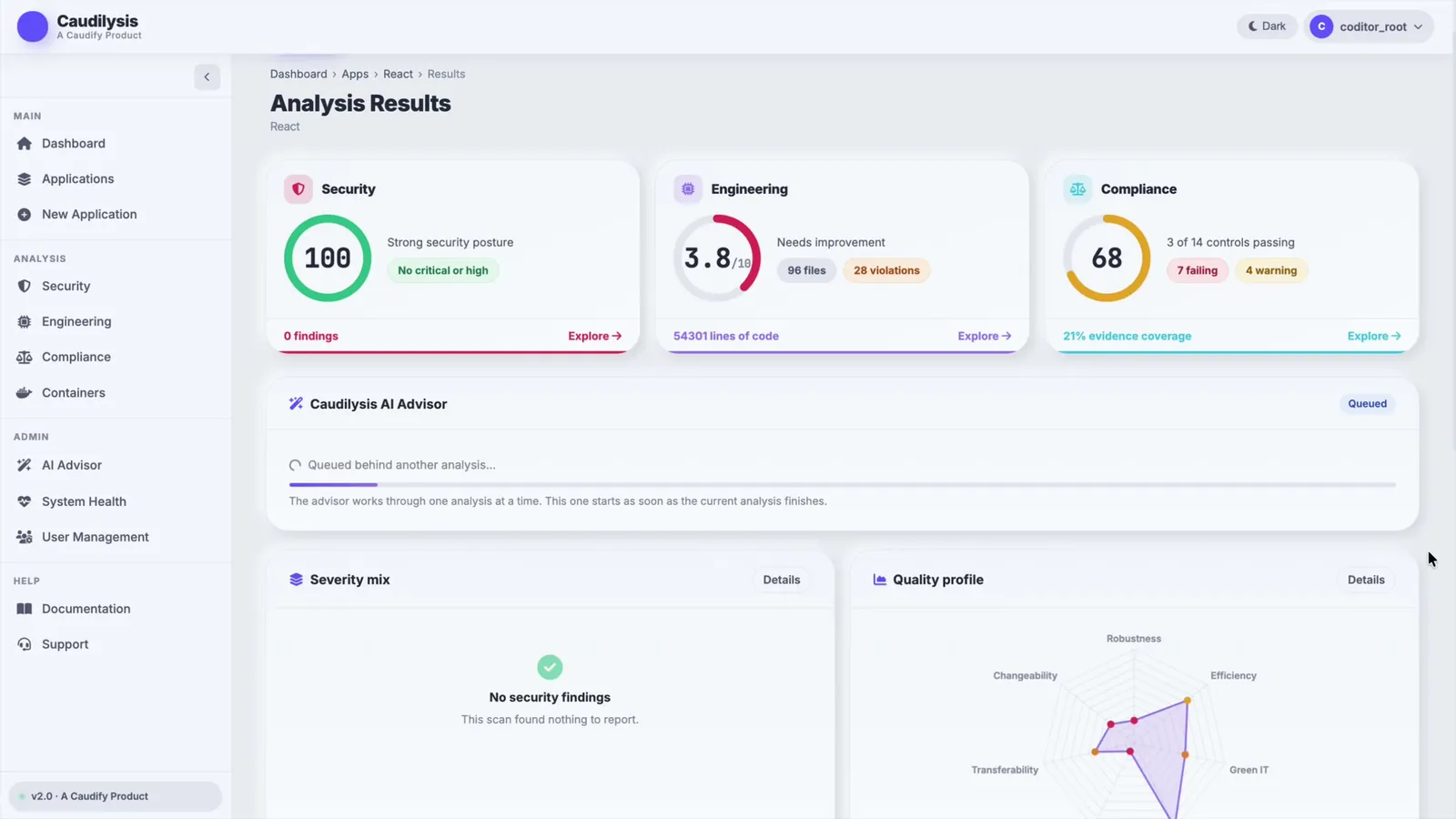
No. Caudilysis is a static analysis platform: it scans your codebase for security, engineering quality and compliance in one pass. For dynamic testing, pair it with a DAST scanner such as ZAP (formerly OWASP ZAP), which is free and open source.
What is static code testing?
Static code testing means checking code without running it: code reviews, linters, type checks and static analysis. It finds defects early and cheaply. Dynamic testing, by contrast, executes the code, as unit, integration and end-to-end tests or DAST scans do.
If you want the static side covered in one scan, Caudilysis reports security findings, engineering quality and compliance evidence together. If you would rather we look at your delivery pipeline as a whole, our custom software development team can start there.