Every product has a limited budget for new and unproven technology, an idea Dan McKinley popularised as choose boring technology. Spend it on the parts that actually differentiate your product, and use calm, well understood tools everywhere else. That one idea answers most of the question of how to choose a tech stack for a SaaS product, and it saves teams from the most expensive kind of mistake: the one that only shows up a year later.
- Give each project a small innovation budget and spend it only where it differentiates the product.
- Prefer technology your team already knows and that you can hire for.
- Choose for the next 18 months of scale, not the next ten years.
- Security, compliance and integrations are stack requirements, not afterthoughts.
- A boring default (TypeScript, a mainstream framework, PostgreSQL, a major cloud) is right for most SaaS products.
The hidden cost of new
A shiny database or framework promises to save you time. What it often does is move the cost sideways: into debugging strange failures at midnight with no community answers, into upgrades that break silently, and into the months it takes a new hire to learn something nobody else uses.
Mature technology has a property that is easy to undervalue: its failure modes are known. Somebody has hit your problem before, written it up and fixed it. With new technology, you are the one writing it up.
The innovation budget
Think of a project as having a small number of tokens to spend on novelty, perhaps two or three. A new AI model approach might be worth a token if it is the core of your product. A new database is rarely worth one if PostgreSQL would do. A new frontend framework almost never is.
Spending a token is fine. Spending one by accident, because something was trending, is how products end up with five novel components and nobody who understands all of them.
A simple test before adopting anything new
Before adopting something new, ask what problem it solves that your current stack cannot, and whether that problem is on your critical path. If the answer is fuzzy, the boring choice is almost always right. Three follow up questions help:
- Who on the team has run this in production? If nobody, budget for learning time.
- What happens if the project behind it stalls? Check maintainers, release cadence and licensing.
- How hard is it to leave? Prefer tools with standard interfaces (SQL, HTTP, open formats).
Criteria for choosing a SaaS tech stack
1. Product requirements first
Start with what the product must do: multi tenancy, billing, real time collaboration, heavy data processing, AI features, mobile apps or offline support. Each pushes the stack in a different direction. A B2B dashboard and a real time collaborative editor should not share an architecture by default.
2. Team skills and hiring
The best stack is often the one your team already knows. Familiar tools mean less time learning and more time building, and mainstream languages make hiring and handover far easier. This matters even more if an external team builds version one and your own team takes it over.
3. Scale you will actually need
Most SaaS products never need exotic infrastructure. A well indexed PostgreSQL database on a managed service carries a remarkable amount of load. Design so you can scale later (stateless services, background jobs, caching), but do not build for ten million users before you have ten paying ones.
4. Security and compliance
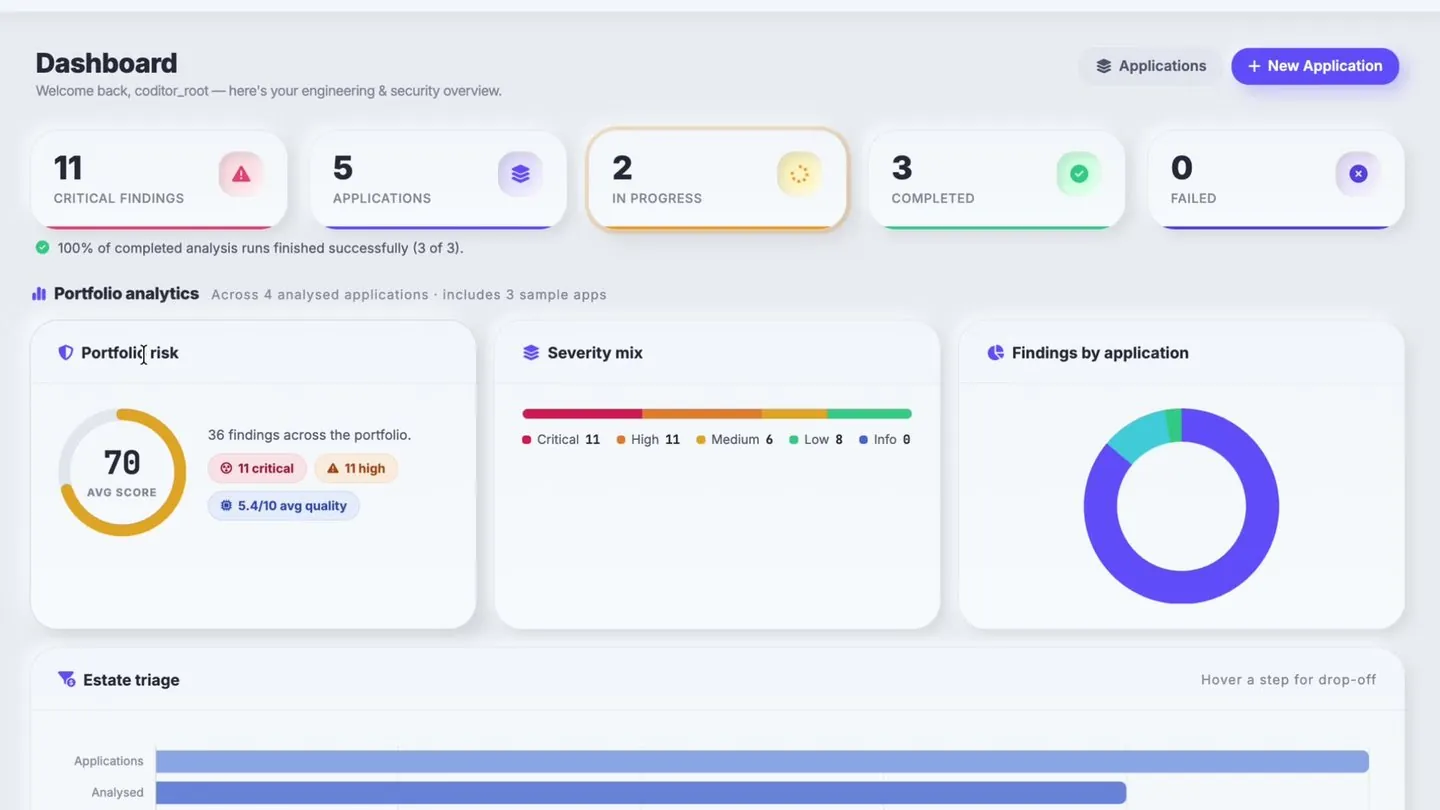
If you sell to enterprises, expect questions about access control, audit logs, encryption and frameworks such as SOC 2 or ISO 27001. Choose a stack with mature authentication libraries, good dependency hygiene and a cloud provider that already meets the standards your customers ask about. Scanning the codebase continuously, for example with Caudilysis, keeps that evidence current.
5. Integrations
SaaS products live among other tools: CRMs, payment providers, identity providers and data warehouses. Prefer ecosystems with well maintained SDKs for the services you will connect to, and design your own API first so integrations are not an afterthought.
A sensible default SaaS stack for 2026
There is no universal answer, but this is a boring, well supported starting point that suits most B2B SaaS products:
| Layer | Default choice | Why |
|---|---|---|
| Language | TypeScript | One language across frontend and backend, strong typing, huge hiring pool |
| Web framework | Next.js (React) | Mature, well documented, server rendering for SEO |
| API and backend | Node.js services or a framework you know | Simple to run, rich ecosystem |
| Database | PostgreSQL | Reliable, relational, extensions for search and vectors |
| Billing | Stripe | Subscriptions, invoicing and tax handled for you |
| Hosting | A major cloud or managed platform | Compliance coverage and managed services |
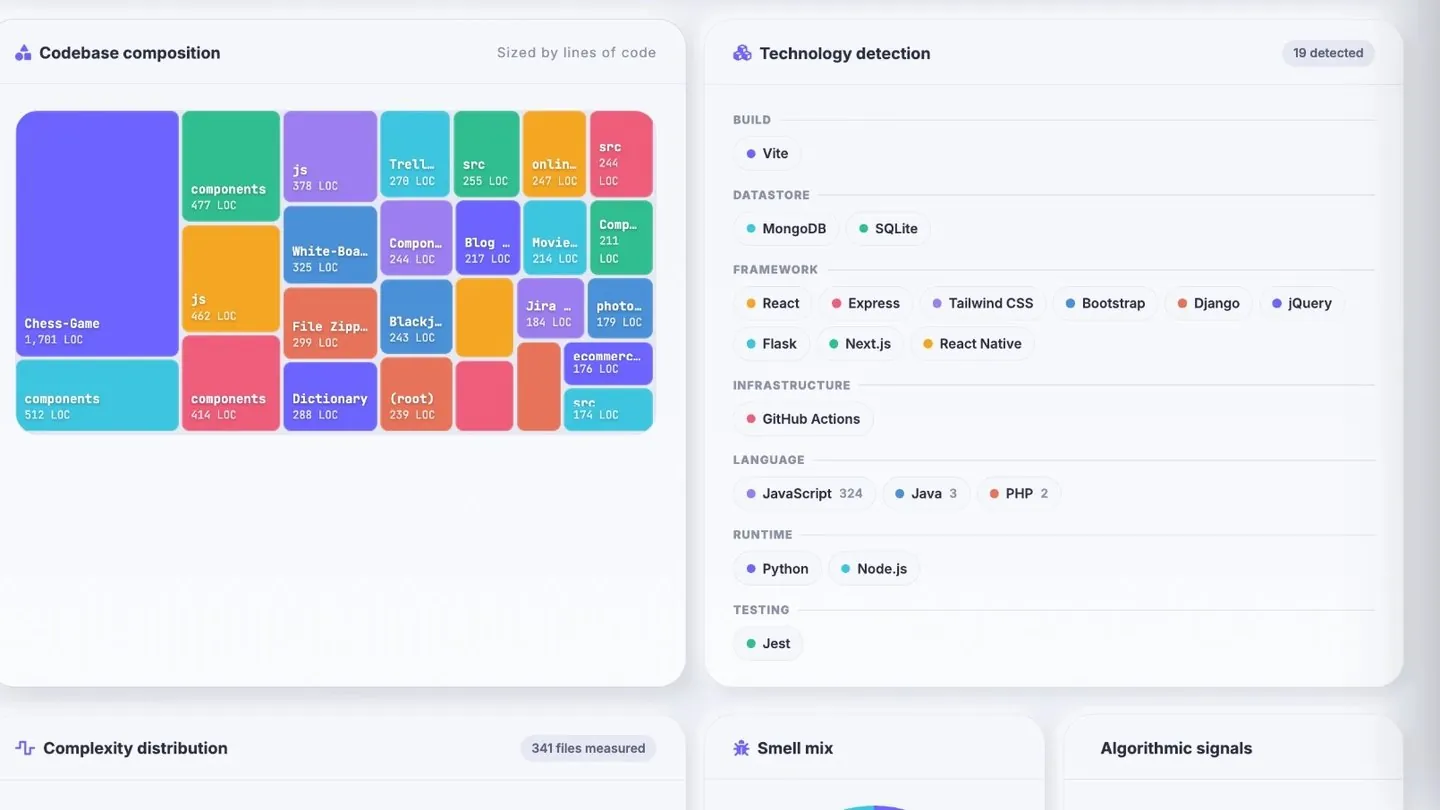
Swap any layer if your team has deep experience elsewhere: Python with Django, Ruby on Rails or .NET are equally boring in the best sense. The point is not the specific tools. It is that every layer is proven, observable and easy to hire for.
When new technology is worth it
Sometimes the shiny option is the right one. If a new model, protocol or runtime is the reason your product can exist, it deserves an innovation token. AI is the common case today: an AI agent built on the Model Context Protocol may be the product. Even then, keep the rest of the stack boring so the novel part gets your full attention.
Frequently asked questions
What is the best tech stack for a SaaS startup?
There is no single best stack, but a boring default works for most B2B SaaS products: TypeScript, a mainstream web framework such as Next.js, PostgreSQL, Stripe for billing and a major cloud provider. Swap any layer for one your team knows deeply, such as Django or Rails. Familiarity and hiring usually matter more than benchmarks.
Should a startup use microservices?
Rarely at the start. A well structured monolith is faster to build, easier to debug and cheaper to run. Split out services later, when a part of the system has clearly different scaling, deployment or team ownership needs. Designing clean module boundaries early keeps that option open without paying for it on day one.
When is it worth choosing new technology?
When it is the reason your product can exist or wins, and you have budget to learn it. A new AI model approach may be core to your value; a new database usually is not. Spend your innovation budget deliberately, on one or two components, and keep everything around them proven and observable.
Boring is not stagnant
Boring does not mean old or slow. It means proven, observable and easy to hire for. That is what lets you take real risks where they count.
If you are choosing a stack for a new product and want a second opinion, our SaaS development team makes these decisions on evidence. A free assessment is a quick way to get an outside view on your current architecture.