AI-assisted software development means using large language models for the mechanical parts of building software (capturing requirements, scaffolding, tests, refactors, documentation) while people keep the decisions: architecture, security, product judgement and review. At Caudify, LLMs are part of every stage of delivery, and no model output reaches a client's users or codebase without a person signing it off.
- LLMs speed up mechanical work: scaffolding, test generation, migrations, review triage and documentation.
- Decisions stay human: architecture, security, product scope and the final design system.
- Every change is reviewed by a person and scanned with static analysis before it merges.
- AI features are judged by an evaluation set, not by how good the demo looked.
- Client data is handled with zero-retention settings or private models when it needs to be.
Why we use AI in delivery at all
A small senior team has to spend its time where judgement matters. Much of software work is necessary but repetitive: turning workshop notes into a requirements list, writing the tenth CRUD endpoint, generating test cases for edge conditions, drafting a runbook. LLMs are good at first drafts of exactly that work. Used with review, they shorten cycle times without lowering the bar.
Used without review, they do the opposite. Research on AI-generated code keeps finding security flaws that look plausible, which is why we wrote a separate guide on how to secure AI-generated code.
Where LLMs sit in each stage
| Stage | What the model does | What people do |
|---|---|---|
| Discover | Maps requirements, edge cases and open questions from briefs, tickets, call notes and analytics exports (with the client's permission) | Run the workshops, decide scope and priorities |
| Prototype | Generates first-pass screens, flows and copy variants from the spec | Designers shape them; the design system stays human-made |
| Build | Pair-programs: scaffolding, tests and refactors | Engineers write and read every change; review and static analysis gate merges |
| Verify | Generates test cases; for AI features, every change is scored against an evaluation set | Engineers review and keep the tests; decide release on the scores |
| Ship and learn | Drafts documentation, runbooks and release notes | The team checks them; monitoring and usage data feed the next iteration |
Discover: nothing said in a workshop gets lost
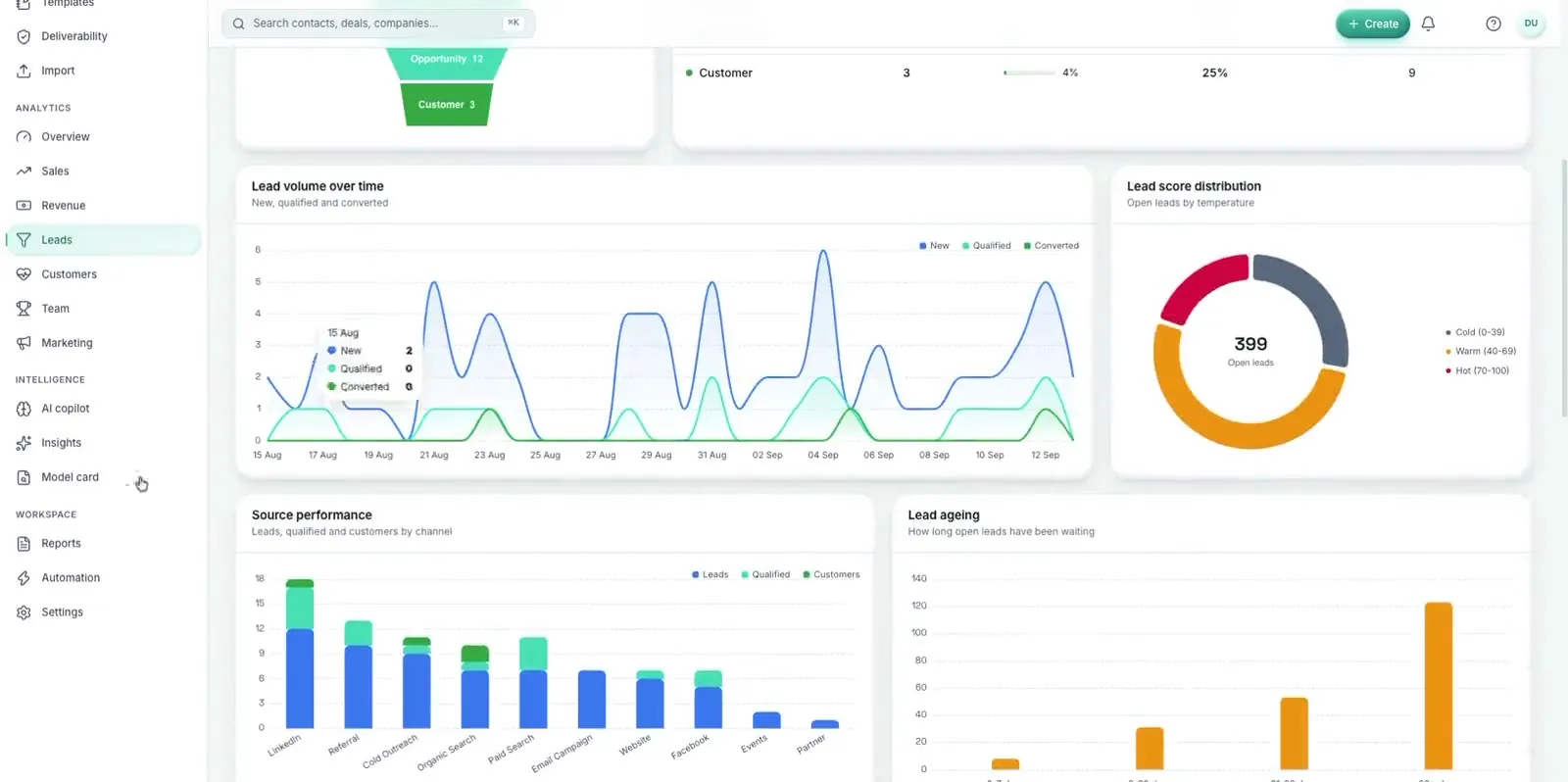
Briefs, tickets, call notes and exports go into a private workspace. A model turns them into a structured list of requirements, assumptions and open questions, and flags contradictions between sources. People run the conversations; the model keeps the record. The output is a better first draft, not a decision.
Prototype: something real to react to, early
Clickable first-pass screens and flows are generated from the specification, then reworked by designers. Clients react to a prototype instead of a document, which surfaces misunderstandings in days rather than at the first release. The final visual language and design system are made by people.
Build: AI pair programming with human review
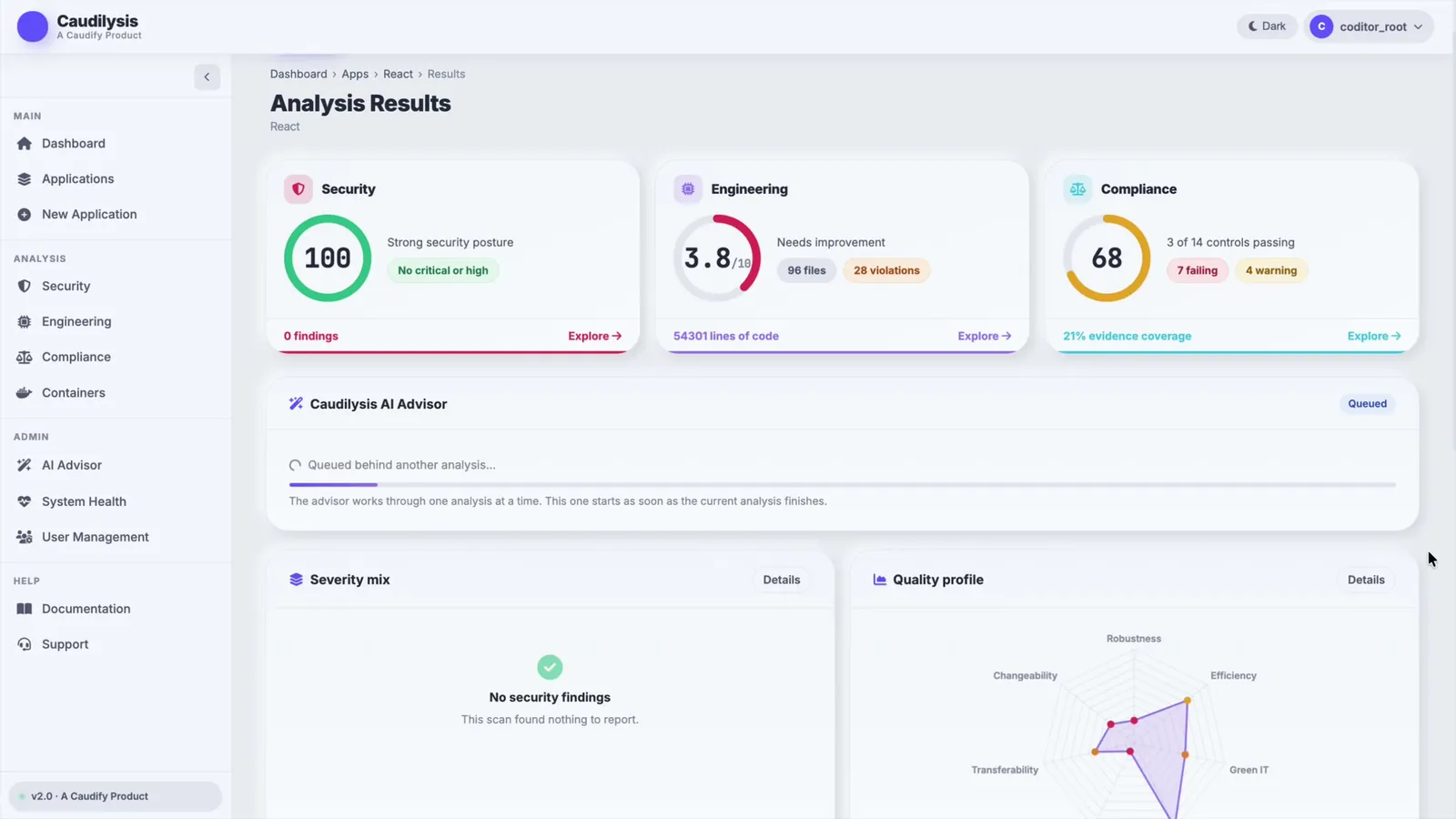
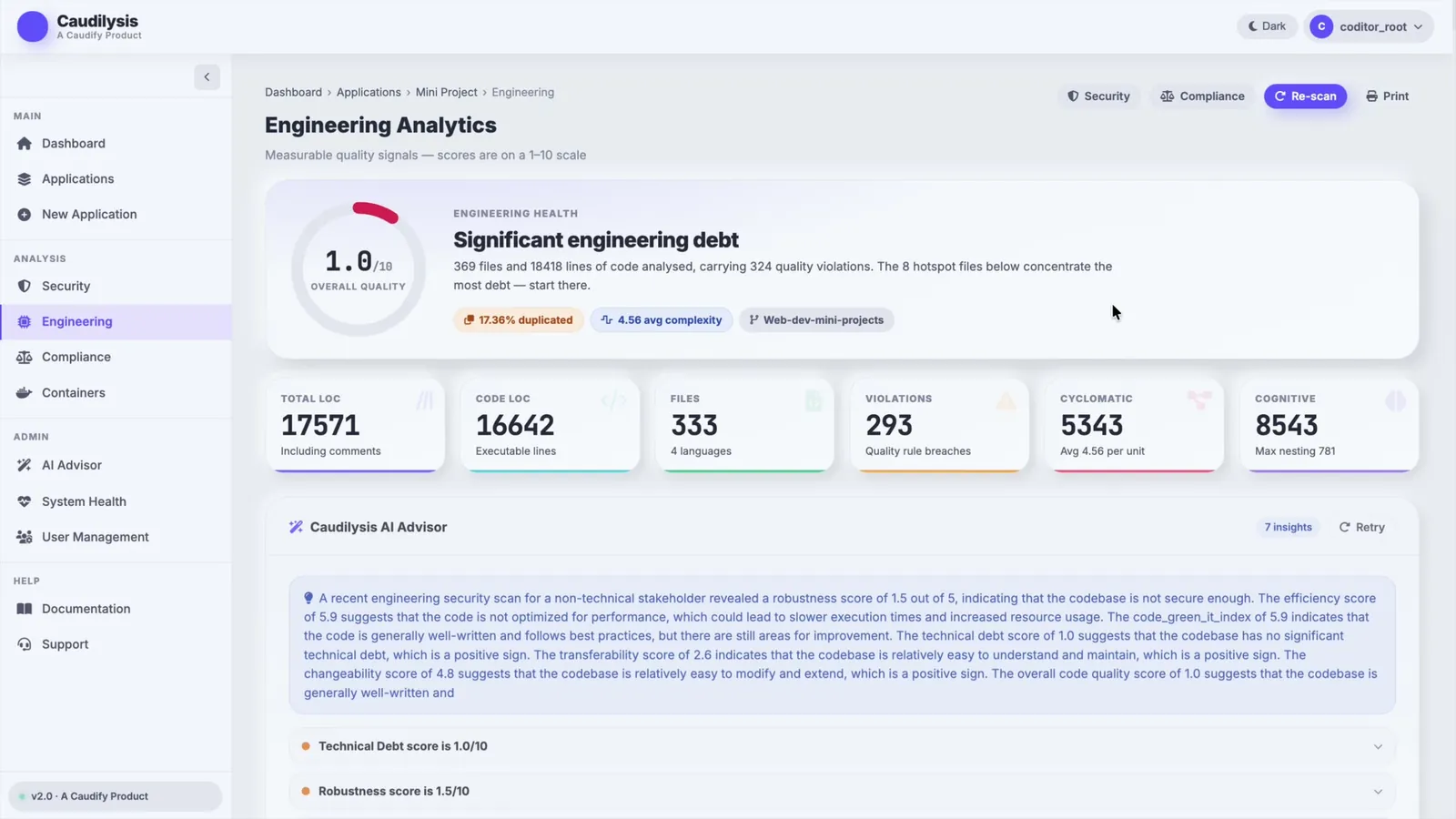
Engineers use AI coding assistants for scaffolding, tests, migrations and refactors. Every change is read by a person, and every change is scanned by Caudilysis, the static analysis platform we build and run, before it merges. We run it against our own repositories first, so the standard we ship to clients is the one we hold ourselves to.
Two habits matter more than the tool. Changes stay small enough to review properly, and an engineer can explain every line that merges. If nobody can explain it, it doesn't ship.
Verify: evals and generated tests in CI
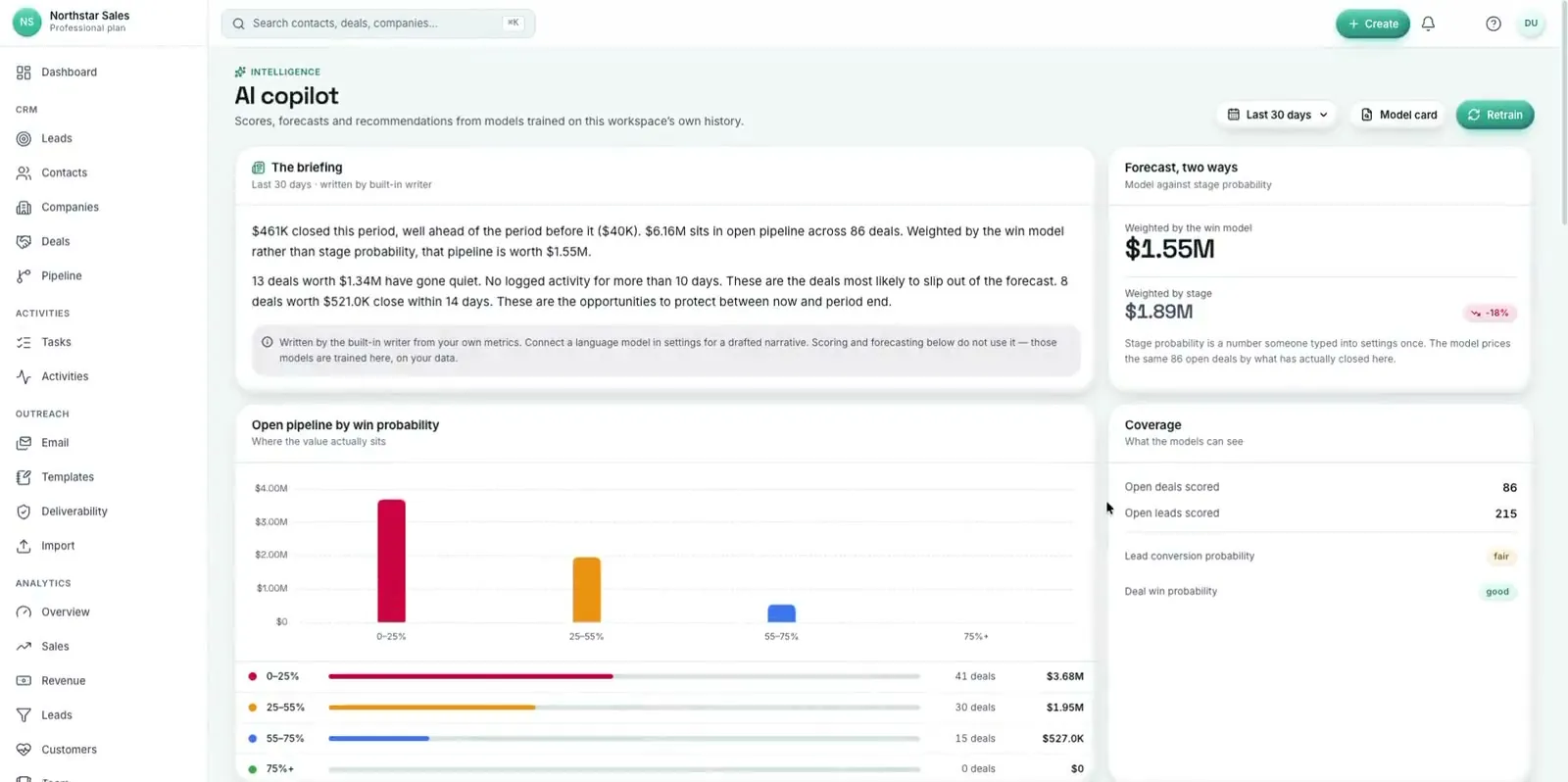
For ordinary features, models draft test cases, including awkward edge cases people forget; an engineer reviews them and keeps the useful ones in the pipeline. For AI features, the test is an evaluation set built from real examples, and every prompt, model or retrieval change is scored against it. That is the difference between a demo and a product, and we cover it in AI features that survive production.
Ship and learn: docs that keep up with the code
Documentation, runbooks and release notes are drafted from the code and tickets, then edited by the team. After launch, monitoring and usage data flow back into the next iteration.
The rules that keep it honest
- A person signs off. No model output reaches users or a codebase without review.
- Your data stays yours. Zero-retention API settings or private, self-hosted models when the data requires it, and documented data flows.
- Model-agnostic. Models are chosen by measured quality, cost and privacy on the task, not by vendor. We cover model choice in LLM development.
- Deterministic where it must be. Anything that has to give the same answer every time, such as a release check, a calculation or a compliance rule, is ordinary code, not a model.
- The client owns everything. Code, prompts, evaluation sets and documentation live in the client's repositories and accounts.
Where AI doesn't help (yet)
- Architecture trade-offs that depend on a client's team, budget and roadmap.
- Security decisions: threat models, permission design and what an agent is allowed to do. The OWASP Top 10 for LLM applications is a reminder of why.
- Product judgement: what to build next, and what not to build at all.
- Taste: the final design, the words on the page, and the feel of an interface.
How to bring AI into your own team's delivery
- Start with review, not generation. Agree that every AI-assisted change gets the same review as any other, and add static analysis to every pull request.
- Pick two mechanical jobs (tests and documentation are good first choices) and use assistants there for a month.
- Write down the rules: what data may go into which tools, which settings are required, who signs off.
- Measure: cycle time, review comments, defects found after release. Keep what helps.
- Teach judgement, not prompts. The skill that matters is knowing when the model is wrong.
Our AI training and coaching does this with teams on their own tools and code.
Frequently asked questions
Does AI-assisted development lower code quality?
It can, if AI-generated code is merged without review. With small changes, human review of every line and automated static analysis on every pull request, AI assistance speeds up mechanical work without lowering the bar.
Is it safe to put client data into AI tools?
Only with the client's permission and the right settings. We use zero-retention API settings or private, self-hosted models when data requires it, and document where data flows.
Which parts of software development benefit most from LLMs?
Requirements capture from existing notes, scaffolding, test generation, migrations and refactors, code review triage and documentation. Architecture, security and product decisions benefit least and stay with senior people.
Want engineers who work this way inside your team? See hire AI developers or compare all the ways to hire AI talent from Caudify.